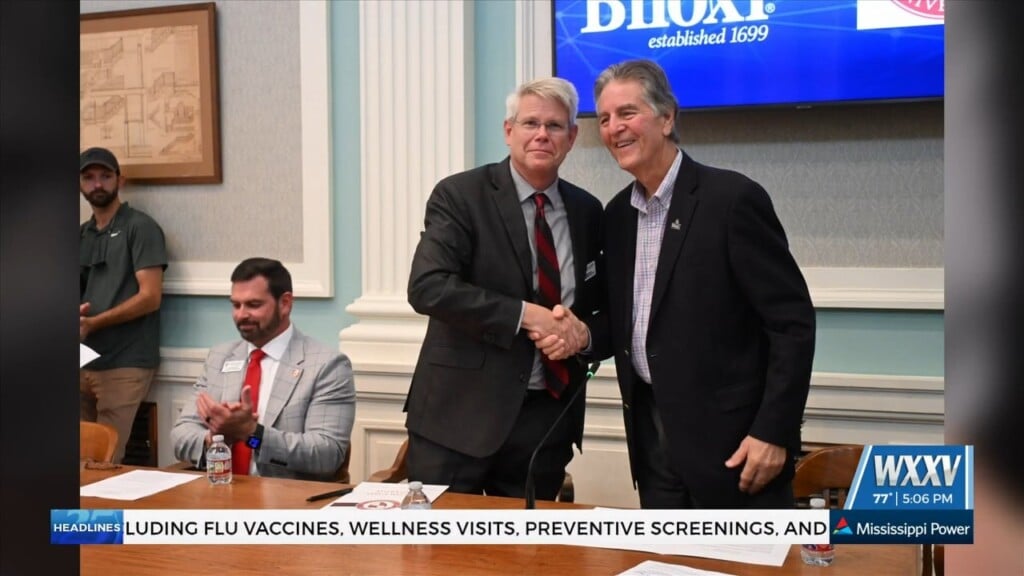
Mississippi Attorney General discusses One Pill Can Kill initiative
OCEAN SPRINGS, Miss. (WXXV) — Some communities on the coast are a little safer this week thanks to an initiative spearheaded by the Mississippi Attorney General.
The City of Ocean Springs has received several fentanyl harm prevention kits from the Attorney General’s Office, which has actively been working to empower and educate Mississippians on the dangers of fentanyl. One Pill Can Kill is an initiative that got its start in 2023.
“We’re out there talking about the harm. We’re talking about how do you educate yourself? What does a counterfeit pill look like versus a real pill? What do you do if you have one that is charged with fentanyl? How do you destroy it properly? Because, again, you can get it on your hands and it can become lethal. Then, most importantly, how do you teach and understand how to use naloxone to save people when they are having a seizure or when they’ve had an overdose,” said Attorney General Lynn Fitch.
Naloxone is just one of several life-saving tools available through the attorney general’s initiative. So far, her office has distributed over 1,000 emergency overdose boxes and 22,000 thousand fentanyl harm prevention kits. Each kit is packed with vinyl gloves, a drug disposal bag, educational materials, and 2 fentanyl test strips.
“If people test, and they determine it’s laced with fentanyl. Hopefully we’ve saved a life right there,” said Fitch.
Resources are only one part of the One Pill Can Kill initiative. There’s also the fentanyl strike force team. Over 800 law enforcement officers from across the state have been trained for the team so far.
“We’re always looking for ways to disrupt this drug cartel situation, and we’ve been very successful in our state at doing that. I just think it’s really important for people to know that, hey, we’re out there looking to take care and protect those who need us the most,” she said.
If your business or organization would like some of the kits to distribute throughout your community, contact the Mississippi Attorney General’s Office.