State health officials encourage up-to-date vaccinations as respiratory virus season ramps up
MISSISSIPPI (WXXV) — With respiratory virus season ramping up across the country, the Mississippi State Department of Health is urging people to take precautions to avoid illness.
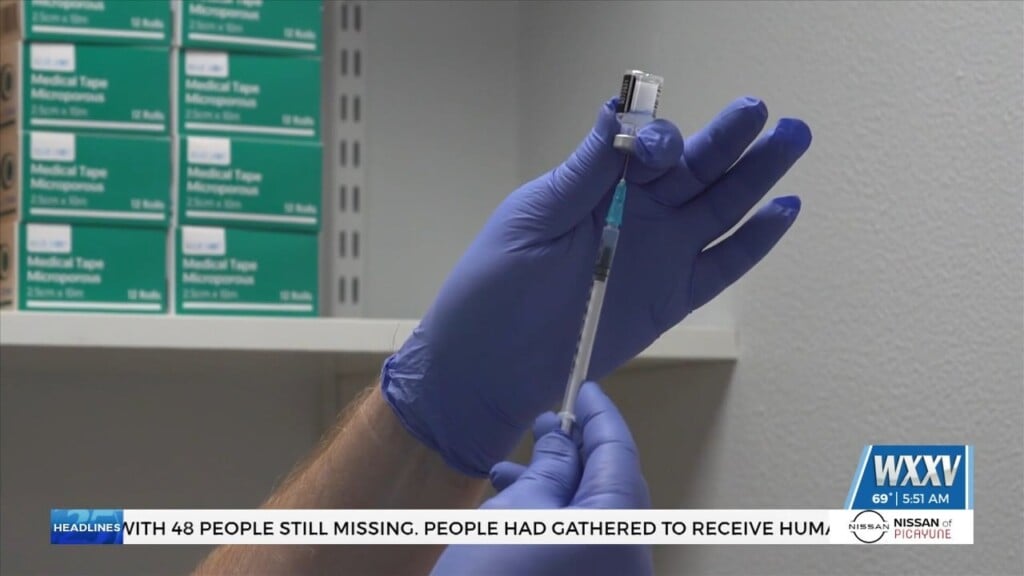
October marked the start of the annual respiratory virus season, and illnesses such as the flu, Covid-19, and RSV can pose serious risks to your health. That’s why health officials are encouraging people to stay up to date on their vaccinations to help protect themselves and those around them.
Already this year the Centers for Disease Control and Prevention say there have been at least 1 million flu cases in the U.S. This has led to more than 16,000 hospitalizations and 900 deaths — including at least three children.
The Mississippi State Department of Health is looking ahead on the local end, encouraging Mississippi residents to get vaccinated as soon as possible to prevent contracting or spreading these viruses further.
“We know that it doesn’t always prevent you from having the disease or getting the flu, but it does decrease the severity of the time that you have it. It decreases the risk of hospitalization, and it decreases the number of complications that you have as a result of contracting the flu,” said State Epidemiologist with MSDH Dr. Renia Dotson, in a Health Talk MS podcast titled ‘Don’t Fall Prey to Fall Viruses!’
Respiratory virus season typically peaks between January and March, but health officials recommend getting your vaccinations updated as early as possible.
It takes about two weeks after vaccination for immunity to develop. And with the holidays approaching, bringing family and friends together, there may be more opportunities for illnesses to spread.
Those most vulnerable to experiencing severe complications from the flu include adults 65 and older, people with chronic medical conditions such as asthma, diabetes, and heart disease, pregnant women, and children younger than five.
“There are things that you can do to protect yourself, and should you get the flu there are other things you can do as well. If you get exposed to someone with the flu, you start feeling bad, you think you’re having symptoms of the flu – cough, fever, chills, aches – contact a provider early, because the anti-viral treatments work within the first one to two days of symptoms, particularly if you are in one of the high-risk groups – the elderly, or you work in healthcare settings – then you wanna get treatment early,” said Dr. Dotson.
Again, MSDH says vaccines may not completely prevent you from contracting an illness, but they could help shorten the recovery process and make symptoms less severe. Click here for more information on vaccines and where to get them.