Meeting the artist behind two sculptures in Ocean Springs
A South Mississippi sculptor has returned home to bring the work of one of his favorite artists to life.
Justin Glowacki with the Roy Howard Community Journalism Center shows us how Phil Proctor turned Walter Anderson’s artwork into two sculptures in Ocean Springs.
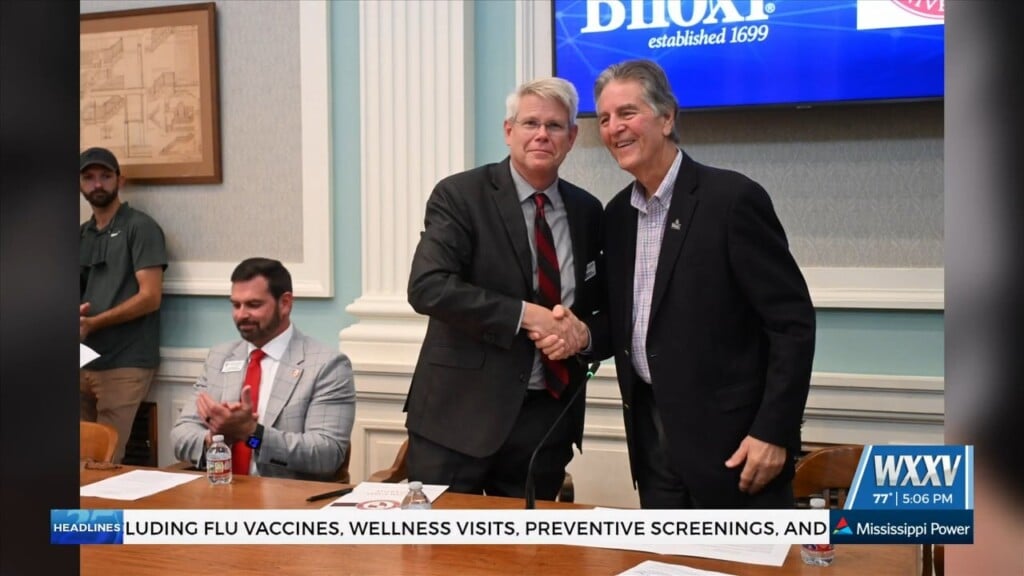
Phil Proctor grew up in Lucedale before moving away to build a career as a sculptor.
More than 20 years later, he’s come back to South Mississippi, to work with designs from an artist he’s admired since childhood. “It was really just such a dream experience to work with Walter Anderson, you know, in spirit. His work has been special to me since I was a kid.”
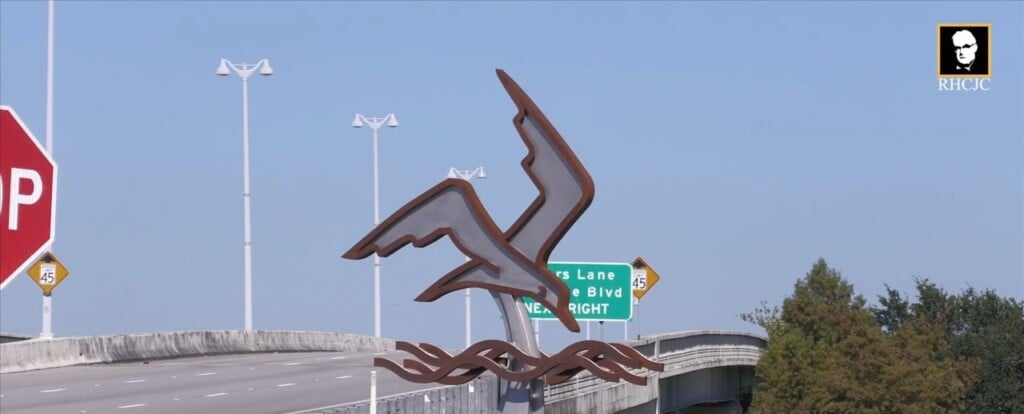
Proctor created two large-scale bird sculptures based on Anderson’s artwork.
The pelican and shearwater are part of the Ocean Springs Gateway Sculpture Project, which brings public art to entrances around the city.
Julian Rankin, strategic adviser for the Walter Anderson Museum of Art, says the project gave Proctor a chance to bring Anderson’s designs to life. “Phil got to collaborate, if you will, with Walter Anderson across time and to turn these into three-dimensional sculptures, and that, I think, was the magic about it.”
The project took about two and a half years to complete, with input from residents and community leaders. The goal was for the sculptures to be a guide for people heading downtown.
Rankin says he hopes other communities will consider using public art in similar ways. “As we’ve now put these up, I think it’s a model for other cities and areas of the state to say, ‘You know, we could do something like this too.'”
Proctor has created sculptures across the country but says working on a project in his home state felt different.
This time, he knew some of the people who would see his work. “I didn’t feel as much pressure with any other project as I did with this one because I felt like, you know, we’re coming back home, and the people that are going to see this are actually people that I know, and people that know me.”
The sculptures were unveiled this month after two-and-a-half years of planning, design, and construction.
The project was funded through the Gulf Coast Restoration Fund.