UN says the US has ‘legal obligation’ to fund agencies after Trump withdraws from several
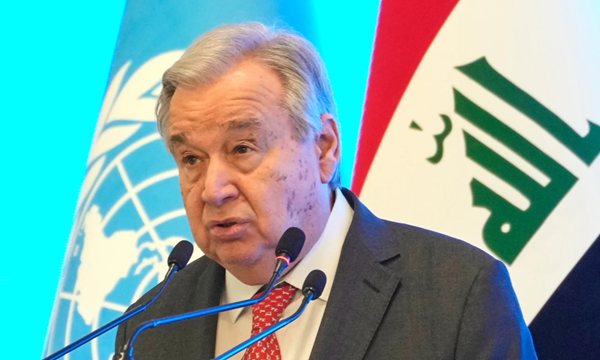
NEW YORK (AP) — The top United Nations official on Thursday said the United States has a “legal obligation” to keep paying its dues that fund U.N. agencies after the White House announced that it is withdrawing support from more than 30 initiatives operated by the world body.
Secretary-General Antonio Guterres said he regretted President Donald Trump’s decision to withdraw from 31 U.N.-related agencies, including the U.N.’s population agency and the U.N. treaty that establishes international climate negotiations. The U.S. will also depart from dozens of other global organizations or initiatives not affiliated with the U.N.
“As we have consistently underscored, assessed contributions to the United Nations regular budget and peacekeeping budget, as approved by the General Assembly, are a legal obligation under the UN Charter for all Member States, including the United States,” Stephane Dujarric, a spokesperson for Guterres, said in a statement.
He added that despite the announcement, the U.N. entities targeted will keep doing their work: “The United Nations has a responsibility to deliver for those who depend on us.”
The strong retort from the U.N. comes after the world body has spent the better part of the past year in a somewhat hostile and fragile back-and-forth with U.S. officials, who, after Trump’s return to office, zeroed in on eliminating billions of dollars in aid and funding to international organizations like the U.N. and humanitarian assistance at large.
Through many conciliatory public and closed-door appeals, U.N. officials, including Guterres, had been able to convince Trump and his allies not to completely abandon the institution the U.S. helped found on the ashes of World War II, including through a $2 billion agreement for humanitarian assistance announced last month. But America’s retreat had already influenced other Western countries, including France and the U.K., to reevaluate humanitarian funding, with many shifting that money toward military spending.
But Wednesday’s announcement surprised diplomats at the highest levels of the U.N., who said they learned about the withdrawal through news reports and the White House social media. There has been no formal communication from the Trump administration outlining the decision, Dujarric told reporters.
Many U.N. officials refused to comment on the impact it would have on their agencies because they had not been given details or official word from anyone in the U.S. government.
Following a yearlong review of participation in and funding for all international organizations, Trump signed an executive order suspending American support for 66 groups, agencies and commissions.
Many of the targets are U.N.-related agencies, commissions and advisory panels that focus on climate, labor, migration and other issues the Trump administration has categorized as catering to diversity and “woke” initiatives.
The administration previously suspended support for the World Health Organization, the U.N. agency for Palestinian refugees known as UNRWA, the U.N. Human Rights Council and the U.N. cultural agency UNESCO. It has taken a larger, à la carte approach to paying dues to the world body, picking which operations and agencies it believes align with Trump’s agenda and those that no longer serve U.S. interests.
Some of the agencies impacted, including the U.N. Population Fund, an organization that provides sexual and reproductive health services worldwide, have long been a lightning rod for Republican opposition, and Trump cut funding for it during his first term.
The withdrawal from the U.N. Framework Convention on Climate Change, or UNFCCC, came as less of a surprise as Trump and his allies had previously withdrawn U.S. support from other climate initiatives.
The 1992 agreement between 198 countries to financially support climate change activities in developing countries is the underlying treaty for the landmark Paris climate agreement. Trump withdrew from that agreement soon after returning to the White House.
Simon Stiell, UNFCCC executive secretary, warned the U.S. that the decision to pull back will harm “the US economy, jobs and living standards, as wildfires, floods, mega-storms and droughts get rapidly worse.”
“The doors remain open for the U.S. to reenter in the future, as it has in the past with the Paris Agreement,” he said in a statement. “Meanwhile, the size of the commercial opportunity in clean energy, climate resilience, and advanced electrotech remains too big for American investors and businesses to ignore.”