The Supreme Court lets the Trump administration end legal protections for Haitians and Syrians
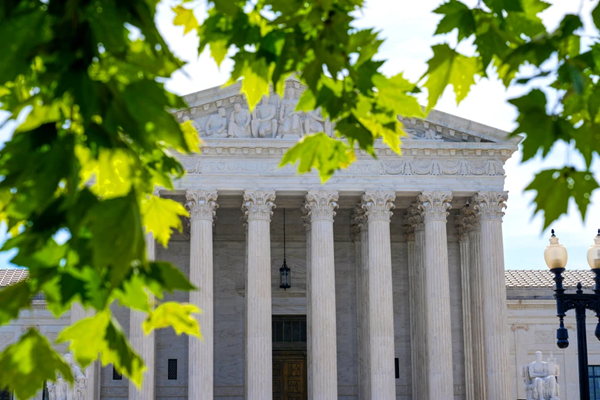
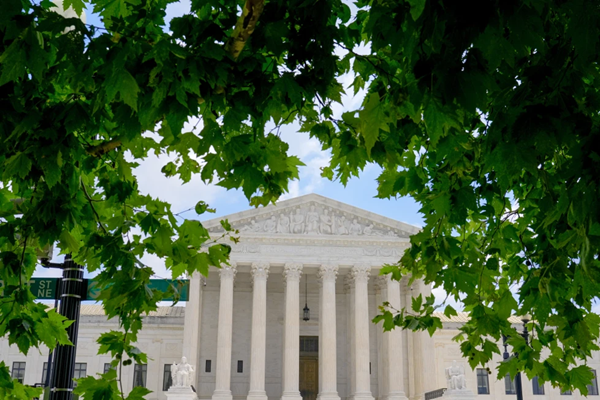
WASHINGTON (AP) — The Supreme Court on Thursday allowed the Trump administration to end legal protections for migrants fleeing violence and natural disaster in Haiti and Syria, exposing hundreds of thousands more people to potential deportation.
The 6-3 decision overturns lower court orders and allows the Department of Homeland Security to swiftly end temporary protected status, a program that protects a total of 1.3 million people from 17 countries.
It marked another victory at the high court for Republican President Donald Trump’s sweeping crackdown on immigration. Though the conservative-dominated court has put the brakes on some of Trump’s immigration policies, it handed him a second win Thursday in a decision clearing the way for the revival of a policy restricting immigrants seeking asylum.
The court’s conservative majority found that immigration authorities have sole authority over the program, and the law doesn’t allow judges to intervene.
The majority opinion from Justice Samuel Alito also brushed aside arguments that derogatory comments from Trump about Haitians showed the decision was unlawfully tinged by prejudice. He called the statements “insufficient to show that the termination of Haiti’s TPS designation was based on the race of the Haitian people.”
Justice Elena Kagan forcefully disagreed, calling Trump’s comments “so repellent and racially inflected that the majority declines to put them in print.” She pointed out that Trump had said Haitians in the U.S. “probably have AIDS,” and he also amplified false rumors during the 2024 campaign that Haitian immigrants in Ohio were abducting and eating dogs and cats.
Lawyers said Haitian immigrants would be in serious danger if they are sent back. “Simply put, the Supreme Court’s ruling will directly result in thousands of innocent people dying violent, needless deaths,” Geoff Pipoly and Andy Tauber said.
They urged the Senate to approve an extension of deportation protections for Haitians that passed the House on a rare bipartisan vote in April.
“Families are here, kids are going to school, parents are going into work, folks are trying to commute, and it’s like the Supreme Court just put all those activities on stop and put folks in limbo,” said Viles Dorsainvil, who runs a support center for Haitians in Springfield, Ohio.
Derrick Johnson, president and CEO of the NAACP, called the ruling “a devastating betrayal of Haitian families who have lived, worked, and contributed to this country for years — only to be cast out based on anti-Black immigration sentiment.”
Haitians with TPS are also a key part of the workforce in long-term care facilities. “This would be a dreadful loss for all seniors in our community,” said Rita Siebenaler, a resident at Goodwin Living, a senior living community in Virginia.
The Justice Department appealed to the Supreme Court after judges postponed the end of the program for about 350,000 Haitians and 6,000 Syrians. The high court sided with the administration before and allowed the end of the program for people from Venezuela.
Federal authorities deny that prejudice played a role. They also cited a Supreme Court decision from Trump’s first term that rejected bias claims based on his social media posts and upheld a travel ban on several Muslim-majority countries.
James Percival, DHS general counsel, applauded Thursday’s ruling. He said the program had, in many cases, become “de facto amnesty. This is a win for the rule of law and common sense.”
Since Trump returned to the White House in January 2025, Homeland Security has ended the protections, including some that had been in place for more than a decade, for people from 13 countries.
The terminations were made even though countries such as Haiti and Syria remain dangerous, immigration lawyers said. Four Haitian women who were deported from the United States in February were later found beheaded and dumped in a river several months later, lawyers said in court documents.
The United States first granted protections to Haitians in 2010 after a catastrophic earthquake and extended them multiple times amid ongoing gang violence that has displaced more than a million people, according to court documents
Syrians were first granted protected status in 2012, during a civil war that lasted for more than a decade before the fall of President Bashar Assad’s government in late 2024.
“Today, many of our community members, they feel lost,” Farrah AlKhorfan of Immigrants Act Now said about Syrian immigrants losing TPS protections. “They are trying to understand … what this decision means for them and how it will be implemented and how much time they will have to prepare for what comes next.”
The program was created by Congress in 1990 to prevent deportations to countries suffering from natural disasters, civil strife and other instability. It allows people already in the country to stay with work permits in increments of up to 18 months, but it does not provide a path to citizenship.