Supreme Court will hear appeal of Black death row inmate over racial bias in Mississippi jury makeup
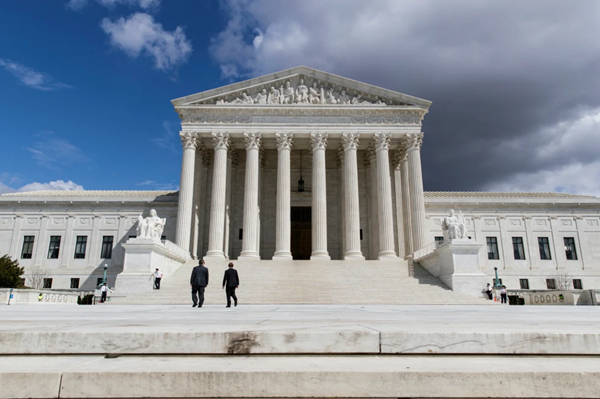
WASHINGTON (AP) — The Supreme Court on Monday agreed to hear the appeal of a Black death row inmate from Mississippi whose case was handled by a prosecutor with a history of dismissing Black jurors for discriminatory reasons.
A federal judge had previously overturned the murder conviction of the inmate, Terry Pitchford, but an appeals court reversed that ruling.
The justices stepped into the case involving the same prosecutor, former District Attorney Doug Evans, who was at the center of a high court case that resulted in a 2019 decision that overturned the death sentence and conviction of Curtis Flowers.
The case will be argued in the spring.
U.S District Judge Michael P. Mills held that the judge who oversaw Pitchford’s trial didn’t give the man’s lawyer enough chance to argue that the prosecution was improperly dismissing Black jurors.
Mills wrote that his ruling was partially motivated by Evans’ actions in prior cases.
Pitchford was sentenced to death for his role in the 2004 killing of Reuben Britt, the owner of the Crossroads Grocery, just outside Grenada in northern Mississippi.
In Pitchford’s case, judges and lawyers whittled down the original jury pool of 61 white and 35 Black members to a pool with 36 white and five Black members, in part because so many Black jurors objected to sentencing Pitchford to death. Then prosecutors struck four more Black jurors, leaving only one Black person on the final jury.
The Supreme Court tried to stamp out discrimination in the composition of juries in Batson v. Kentucky in 1986. The court ruled then that jurors couldn’t be excused from service because of their race and set up a system by which trial judges could evaluate claims of discrimination and the race-neutral explanations by prosecutors.
When the Supreme Court ruled in favor of Flowers, Justice Brett Kavanaugh wrote that Evans had engaged in a “relentless, determined effort to rid the jury of Black individuals.”
Flowers was tried six times in the shooting deaths of four people. He was released from prison in 2019 and the state dropped the charges against him the following year, after Evans turned the case over to state officials.