Hattiesburg Zoo welcomes four new residents
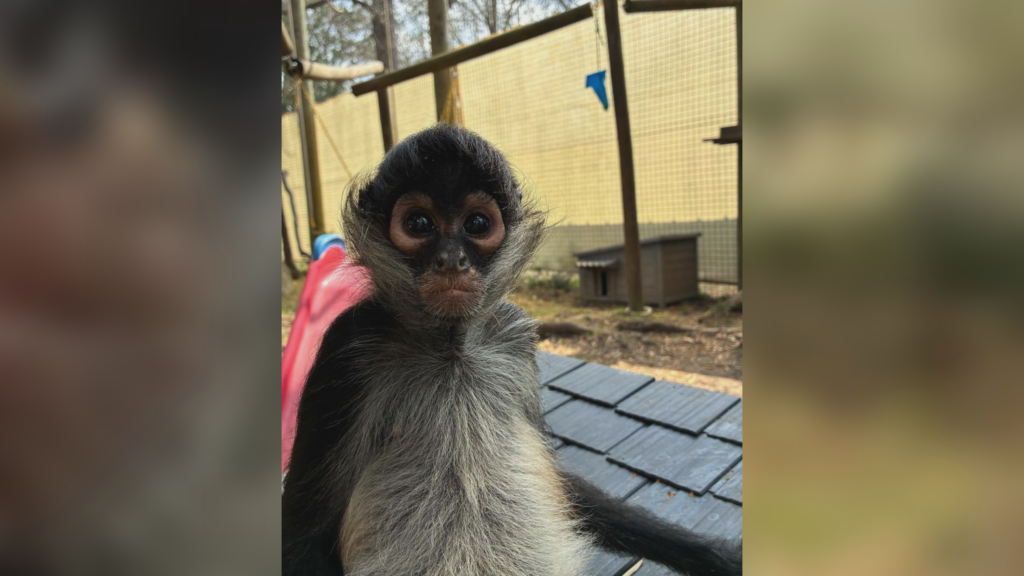
Hattiesburg, Miss. (WXXV)- The Hattiesburg Zoo is now home to four juvenile spider monkeys, two males and two females. Each monkey has gone through a quarantine period and all four are being slowly introduced to their outdoor habitat with Rico, a senior adult male spider monkey who has been at the Zoo for several years.
While the Hattiesburg Zoo is happy to have the new residents, how they came to call the zoo home is an important lesson against the pet trade. Each spider monkey was attempted to be smuggled into the United States from Mexico in lunch boxes. The monkeys were discovered by US Fish & Wildlife Services at the border and were confiscated under the Lacey Act, which makes it illegal to import, export, transport, sell, receive, acquire or purchase any wildlife, fish or plants that were taken in violation of federal, state, tribal or foreign laws. The Hattiesburg Zoo was contacted by the AZA Wildlife Trafficking Alliance and the Species Survival Program and asked to permanently house and care for the primates.
“The pet trade is very dangerous and often results in the death of the mothers of the primates, which are purposefully or accidentally killed by traffickers attempting to separate and capture their babies in an effort to smuggle and sell them,” said Kristen Moore, Director of Wildlife for the Hattiesburg Zoo. 2,000+ primates are attempted to be smuggled into the United States each year. “Spider monkeys live in large troops and create strong family bonds, which cannot be
replicated by humans,” continued Moore. “They require special care, diets and habitats and are not ideally suited to be raised in a residential environment.”
Spider monkeys are found in the tropical forests of Central and South America, from southern Mexico to Brazil. The genus contains seven species, including the endangered black-handed spider monkey and brown spider monkey. Their disproportionately long limbs and long prehensile tail make them one of the largest New World monkeys and give rise to their common name.
In their natural environment, spider monkeys live in the upper layers of the rainforest and forage in the high canopy, from 25 to 30 m (82 to 98 ft). They primarily eat fruits but will occasionally consume leaves, flowers, and insects. Due to their large size, spider monkeys require large tracts of moist evergreen forests and prefer undisturbed primary rainforest. They are social animals, living in bands of up to 35 individuals but splitting up to forage during the day.
“An important part of our mission at the Hattiesburg Zoo is to educate our guests, and a part of that education is to warn against raising wild animals as pets,” said Jeremy Cumpton, Director of Conservation and Education. “While we are sad about how these monkeys came to call the Hattiesburg Zoo home, we are happy that our animal care and veterinary teams will be able to care for them and we know our guests will love watching them grow with us.”